
Retail inflation eased to a nearly six-year low of 3.16 per cent in April mainly due to subdued prices of vegetables, fruits, pulses, and other protein-rich items, creating enough room for the Reserve Bank to go for another round of rate cut in the June monetary policy review. The Consumer Price Index (CPI) based inflation was 3.34 per cent in March and 4.83 per cent in April 2024. It was 3.15 per cent in July 2019.
'Bank has enabling provision to raise capital up to Rs 7,500 crore over a longer period of time.'

India's largest cable and wire manufacturer Polycab India ended financial year 2024-25 (FY25) on a high, delivering another strong quarter of double-digit growth and market share gains. This coupled with margin expansion, operating breakeven for its fast-moving electrical goods (FMEG) business, and steady exports outlook for FY26 is expected to support the stock, which is up 18 per cent over the past month. The stock is currently trading at Rs 5,765 a share.

Trading sentiment in the equity market will largely be driven by domestic corporate quarterly earnings, any update related to US tariffs and foreign fund movements this week, analysts said. Investors would also focus on world market trends, movement of global oil benchmark Brent crude and the rupee-dollar trend for further cues, experts noted.

Power Grid Corporation of India (PGCIL) was one of the top Sensex gainers in trade on Monday, ending with gains of nearly 9 per cent. The stock has gained about 42 per cent year-to-date. For the March quarter, the company reported a revenue of Rs 12,000 crore, which was down 3 per cent year-on-year (Y-o-Y) but up 4 per cent quarter-on-quarter (Q-o-Q). The drop was on account of one-time arrears related to the Nagapattinam tariff bid competitive bidding (TBCB) project in Q4 FY23.
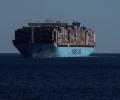
Adani Ports and JSW Infrastructure, India's leading private port operators, are expanding their logistics services to capture extra cargo while they run integrated transport services. "With incrementally less availability of lucrative port assets that can drive cargo volumes, port operators have naturally shifted their focus on deriving value in the upstream integration, i.e., the logistics space.

Steel maker JSW Steel's Q3 results, announced on January 24, 2025, after market hours, failed to meet Street expectations. The company reported a consolidated net profit attributable to the owners of Rs 717 crore in Q3FY25, reflecting a 70.3 per cent decline Y-o-Y, compared to Rs 2,415 crore in Q3FY24.

Banks have outperformed the broader market in the past six months and most of the leading lenders have given positive returns to investors compared to a negative return delivered by benchmark indices.

The only silver lining in March's performance -- which otherwise dragged down the financial year's momentum -- was a 6 per cent year-on-year (Y-o-Y) growth compared to March of the previous year. This is largely due to incentives, festival-driven gains, and new launches.

The market could not make a clear assessment of Tech Mahindra with the stock swinging wildly in the last two sessions. The results on Thursday were expected to be weak but the stock dropped slightly. However, investors reviewed the three-year turnaround plan and decided the stock had been oversold and the price recovered 7.5 per cent.

Power Grid Corporation of India's (PWGR's) Q3FY25 revenue declined 3 per cent year-on-year (Y-o-Y) to Rs 11,200 crore, with operating profit falling 7 per cent Y-o-Y to Rs 9,500 crore and margin contracting to 85 per cent from 91 per cent Y-o-Y. Other income surged 89 per cent Y-o-Y to Rs 500 crore, but regulatory income dropped 62 per cent Y-o-Y to Rs 42.5 crore.
While most analysts are expecting poor results from oil marketing companies (OMCs) in the first quarter of 2024-25 (Q1FY25) and even in the first half (H1) of FY25, GAIL (India) could be an outlier. Upstream producers, Oil and Natural Gas Corporation (ONGC) and Oil India (OIL) could do well due to strong crude and gas prices, but refiners are likely to see weak margins and the impact of frozen prices during the election period will also be negative.

Electrical Consumer Durable (ECD) companies like Havells India have seen strong Q4FY24 sales and continuing seasonal demand across fans, air coolers, and room air conditioners (RAC) in addition to business-to-business sales of cables, switchgear, and professional lighting, among others. Havells India's Q4FY24 revenue rose 12 per cent year-on-year (Y-o-Y) to Rs 5,400 crore, in-line with consensus. Strong summer demand led to robust volume growth in fans and RAC and volume growth in cable and wires (C&W) due to infrastructure spending and real estate activity.

Investors shunned shares of Bajaj Finance on Friday, a day after the non-banking financial company (NBFC) reported a sharp contraction in its net interest margin (NIM) for the March quarter of the financial year 2023-24 (Q4FY24). The losses accounted for a fifth of the benchmark S&P BSE Sensex's 609-point loss. Most brokerages have tamed their earnings expectations for the next couple of quarters, after the management said it expected the pressure on NIMs to continue in the near term.

Reserve Bank on Thursday retained the growth and inflation projection at 7.2 per cent and 4.5 per cent respectively for the current fiscal amid expectations of a normal monsoon. In its last bi-monthly monetary policy review in June, RBI had projected real GDP growth and retail inflation at the same.

GAIL India's second quarter (Q2FY25) performance met expectations.

The pre-sales volume of Godrej Properties (GPL) for third quarter of the financial year 2025 (Q3FY25) declined 6 per cent year-on-year (Y-o-Y) -- down 21 per cent quarter-on-quarter (Q-o-Q) -- to 4.1 million square feet (msf), resulting in a pre-sales value of Rs 5,450 crore, down 5 per cent each Y-o-Y and Q-o-Q. About 77 per cent came from newly launched projects. For 9MFY25, pre-sales were up 48 per cent Y-o-Y to Rs 19,300 crore.

Indian Hotels reported strong consolidated revenue growth of 29 per cent year-on-year (Y-o-Y) in the third quarter of the current financial year (Q3FY25), led by revenue per available room, or RevPAR, growth of 15 per cent. The average room rate, or ARR, was up 13 per cent and occupancy improved 120 basis points (bps) Y-o-Y on a standalone business. Like-for-like revenue growth was 15 per cent Y-o-Y, while TajSats (airline catering) grew by 18 per cent Y-o-Y.

Cement manufacturers have hiked prices after a challenging Q1FY25, and Q2FY25 (so far) when general elections and seasonal factors cut down on construction activity. The August prices are currently around 3-6 per cent above July 2024 but may not be sustainable in the face of weak demand. H2FY25 may see realisation growth which, if it happens, would drive average operating profit/tonne improvements in H2FY25 over a muted H1FY25.

Its 11MFY24 production is around 40.2 mt. In FY25, it could hit 50 mt and it may reach 55 mt by FY26. The PSU has capex plans for multiple projects, which should improve the product mix and augment capacity to 100 mt for FY30.

Re-rating of Axis Bank's stock may continue in the near-future, believe analysts, as the risk-reward on the stock remains favourable amid healthy financials. The bullish stance comes after the Mumbai-based lender delivered a strong outperformance in the March quarter of fiscal year 2023-24 (Q4FY24) on core pre-provision profit and net profit, with improving asset quality. Axis Bank's net interest margin (NIM) expanded, against expectations, even in a tough market.

There is no impediment to normal operations as Tata Motors puts in place the demerger process of its commercial and passenger vehicles businesses. Instead, the demerger would provide greater manoeuvrability for both new entities to operate independently, according to Tata Motors management. While there may not be immediate value unlocking, it will give investors clarity about future growth and the financials across different segments.

The Freedom 125 has sold 8,310 units in October to date. This is its highest since it was launched in July and may touch close to 9,000 by the end of the month.
NMDC, the country's largest iron-ore miner, posted a consolidated revenue in the January-March quarter of FY24. This was in line with estimates at Rs 6,500 crore, which was up 11 per cent year-on-year (Y-o-Y), and a 20 per cent quarter-on-quarter (Q-o-Q) rise on the back of realisations. Iron-ore production was 13.3 million tonnes (down 6 per cent and up 8 per cent Q-o-Q), while the sales stood at 12.5 MT (up 1 per cent Y-o-Y and up 10 per cent Q-o-Q).
Shares of Bajaj Finance surged over 6 per cent on Thursday after the diversified non-banking finance company reported an 18 per cent increase in consolidated net profit to Rs 4,308 crore for the December quarter. The stock rallied 6.33 per cent intraday to touch Rs 8,249.95 - a 52-week high -- on the BSE.

Tata Motors reported a consolidated net profit of Rs 17,483 crore (adjusted for exceptional gains and losses) for Q4FY24, surpassing TCS' consolidated net earnings of Rs 12,434 crore. For the automotive major, this marked a 213.7 per cent year-on-year increase in the bottom line, from Rs 5,573.8 crore a year ago. In contrast, India's biggest IT firm saw a more modest Y-o-Y growth of 9.1 per cent in net profit, from Rs 11,392 crore.

State-owned Indian Renewable Energy Development Agency's (Ireda's) chairman and managing director Pradip Kumar Das has announced that the company has requested the government to allow it to carry out a follow-on public offer (FPO) as it will need further equity infusion to maintain the pace of growth. The FPO would aim to raise between Rs 4,000 crore and Rs 5,000 crore. Ireda, which provides funding assistance and other services to renewable energy and energy efficiency/conservation projects and is 75 per cent owned by the government of India, has requested the Union Finance Ministry to be included under Section 54EC of the Income Tax Act, which will help reduce borrowing costs.

Coal India (CIL) produced 89 million tonnes (MT) in March-24, up 6 per cent year on year (Y-o-Y) and offtake was 69 MT, up 7 per cent Y-o-Y. FY24 production was 774 MT, up 10 per cent Y-o-Y. Offtake was 754 MT, up 9 per cent Y-o-Y. CIL targets production of 838 MT in FY25, up 8 per cent Y-o-Y over FY24.

As the political uncertainty settles down, investors are reviewing their assumptions about the power sector. Demand here is likely to continue to grow strongly in the long-term at around 5-6 per cent CAGR (compounded annual growth rate) during the next 6-7 years. Given policy continuity, several trends will persist.

Tata Power's Q2FY25 reported results were above consensus despite challenges like low plant availability at Mundra and Odisha discom operations affected by rain. A positive development for the power major included module manufacturing hitting nearly 100 per cent capacity utilisation. The Board has approved an investment proposal for a 1GW pumped storage project (PSP).

Gland Pharma beat muted expectations for Q2FY25. There was increased Ebitda (Earnings before interest, taxes, depreciation and amortisation) loss at Cenexi, the CRAM subsidiary. However, overall Ebitda margin was better than expectations at 21.1 per cent. But given two years of earnings decline in FY23 and FY24, the business may have bottomed and upper-teens EPS (earnings per share) growth looks possible over next two financial years.

LIC Housing Finance (LICHF) delivered a healthy FY24 with improvements in net interest margin (NIM) and credit costs and an improved return on assets of 1.7 per cent compared to an average of 1.3 per cent between FY14-FY23. Loan growth was low due to technology upgrades to the platform in H1FY24, though momentum improved in H2FY24. In Q4FY24, the net interest income (NII) came in at Rs 2,250 crore.

Dr Reddy's Laboratories (DRL) is set to acquire Haleon's global portfolio of consumer healthcare brands in the nicotine replacement therapy (NRT) category outside of the US. DRL will pay a total consideration of 500 million, including an upfront cash consideration of 458 million and contingent cash payments up to 42 million based on performances in CY25 and CY26. DRL will acquire the portfolio through the purchase of shares of Northstar Switzerland SARL, a Haleon group firm.

Marico's January-March quarter (Q4) results were slightly better than consensus. Revenue was up by 1.7 per cent year-on-year (Y-o-Y) to Rs 2,280 crore. Ebitda grew by 12.5 per cent Y-o-Y to Rs 440 crore. Adjusted PAT was up 10.3 per cent Y-o-Y to Rs 320 crore.

Information technology (IT) companies have been on the road to revival in the past one year. From being the worst-hit sector in 2022 with a loss of 26 per cent, the Nifty IT index closed 2023 with gains of 24 per cent. So far in 2024, the index is up around 7 per cent against the nearly flat Nifty 50 benchmark index. The IT index has been on a continuous decline in the last three sessions.

Do not, however, enter expecting quick returns.

The stock of United Spirits, the country's largest liquor company by market capitalisation (mcap), has gained 11 per cent over the past week on double-digit growth guidance, rising premiumisation trend, operationally in-line performance in the March (Q4FY24) quarter and a rally in consumer stocks. The revenue growth of the company came in at 7 per cent year-on-year (Y-o-Y) mirroring the growth of the prestige and above (P&A) segment. This segment comprising premium brands accounts for 88 per cent of the revenues.

Iron ore mining major NMDC's results for the April-June quarter (Q1) of FY25 were better than estimates. Weak volumes were balanced off by higher realisations, better average selling price (ASP) and lower royalties which boosted bottomline. The revenue was in line with estimates at Rs 5,400 crore, flat year-on-year (Y-o-Y) and down 17 per cent quarter-on-quarter (Q-o-Q).

A weaker-than-expected sales performance, concerns about higher competitive intensity in the current year, and earning cuts by some brokerages have weighed on the stock of the country's largest paint maker, Asian Paints. While the Q3 volume show was slightly below expectations, the company's operational and bottom line beat estimates, benefiting from the falling raw material costs. The stock ended the day with a decline of over 2 per cent at Rs 3,175 apiece.

Domestic institutional investors pumped Rs 2.3 trillion into equities during H1 CY24. Of this, mutual funds contributed 80%.
